Skip to content
‘I think I know how to fix this.’

A Harvard Medical School team led by Andrew Kruse has engineered a longer-lasting form of the hormone relaxin—an approach that could help address heart failure with preserved ejection fraction (HFpEF), a hard-to-treat condition affecting roughly 1 million people in the U.S. By converting relaxin from a two-chain to a one-chain molecule and fusing it to an antibody Fc-domain to extend its half-life, the researchers advanced a promising concept toward therapeutic use, with support from Harvard’s Office of Technology Development and the Blavatnik Biomedical Accelerator through pilot and development funding and business guidance. That early translational backing helped de-risk the science, enabling Kruse to license the technology and launch Tectonic Therapeutic, where the resulting candidate (TX45) is now in a Phase 2 clinical trial and being explored for pulmonary hypertension linked to heart failure and other serious cardiopulmonary conditions. As Kruse noted, “The Blavatnik Accelerator is really what allowed us to go from a pure research compound to something that was ultimately a clinical candidate.”

Tiler Peck: A Once-In-A-Generation Dancer with a Second Act

In a recent Financial Times profile, New York City Ballet principal dancer Tiler Peck reflects on the craft, stamina, and creative drive that have shaped a career defined by precision, musicality, and reinvention. Now 37, Peck remains in relentless demand—balancing punishing rehearsal schedules with a growing portfolio that spans performance, choreography, and work beyond the stage—while continuing a celebrated partnership with fellow dancer and husband Roman Mejia. The article centers on her return to London with Turn It Out, a four-part program created with leading artists including William Forsythe, Alonzo King, and Michelle Dorrance, culminating in a genre-blending finale that reflects Peck’s wide-ranging practice. Lady Emily Blavatnik and the Blavatnik Family Foundation are proud to support Tiler Peck's return to Sadler’s Wells, helping bring this distinctive show to UK audiences.

Starmer Must Use Our Scientific Stars to Drive the Economy

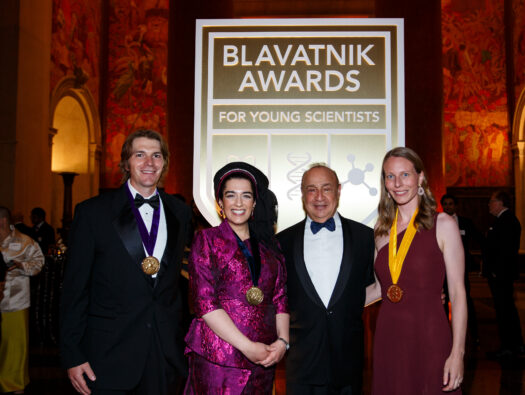
In a recent Independent commentary, Chris Blackhurst reflects on the 2026 Blavatnik Awards for Young Scientists at the Banqueting House in Whitehall, describing an evening that highlighted the UK’s strength in early-career research and its potential contribution to national renewal. The piece profiles this year’s three laureates—Maxie Roessler, Thi Hoang Duong (Kelly) Nguyen, and Paola Pinilla—recognized for advances spanning energy transfer in electrons, the biology of DNA replication and chromosome protection, and new insights into how planets begin to form. Blackhurst argues that policymakers should pay closer attention to the scientific talent already thriving in the UK, noting that past awardees have translated discoveries into patents and new ventures, and urging the government to make science and technology central to economic growth.

Three Women Named Britain’s Brightest Young Scientists, Each Winning ‘Unrestricted’ £100,000 Blavatnik Awards Prize

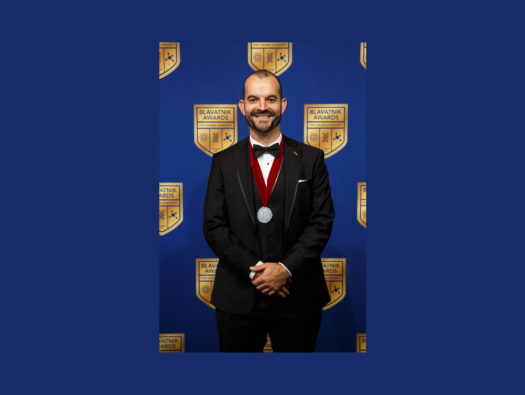
The Blavatnik Family Foundation and The New York Academy of Sciences has announced the three 2026 Laureates of the Blavatnik Awards for Young Scientists in the United Kingdom, who each receive £100,000 – the nation’s largest unrestricted prize for science. The Laureates were announced at a gala dinner and awards ceremony held at the historic Banqueting House in London. The recipients, selected from nine outstanding Finalists, are recognised for exceptional early-career achievements across the Life Sciences, Chemical Sciences, and Physical Sciences & Engineering. The remaining six Finalists are each awarded £30,000 in recognition of their exceptional scientific contributions. It is the second time in the United Kingdom that all three Laureates in the Blavatnik Awards are women scientists.

Learn More

Discover the cutting-edge science we fund

Providing many of the world's best researchers, scientists, and universities with support, and funding to discover breakthroughs that solve humankind's greatest challenges.

See how we support great cultural institutions around the world

The Foundation contributes to renowned institutions that showcase the breadth of arts and culture, including performance, exhibition and education.

Visit the Blavatnik Archive

The Blavatnik Archive is a nonprofit foundation dedicated to preserving and disseminating materials that contribute to the study of 20th-century Jewish and world history, with a special emphasis on World War I, World War II, and Soviet Russia.

Blavatnik Family Foundation
Privacy Overview

This website uses cookies so that we can provide you with the best user experience possible. Cookie information is stored in your browser and performs functions such as recognising you when you return to our website and helping our team to understand which sections of the website you find most interesting and useful.

You can find more information by this link