Skip to content

Category: Jewish Causes

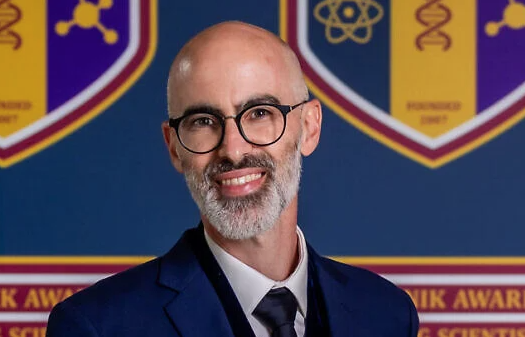
Pontus Skoglund Recognised as 2026 Blavatnik Finalist

Pontus Skoglund, Senior Group Leader at the Francis Crick Institute, has been named a 2026 Blavatnik Awards for Young Scientists UK Finalist in the Life Sciences category for his pioneering work in ancient DNA and human genetic history. He established the UK’s first high-throughput ancient DNA laboratory at the Crick, significantly advancing the analysis of archaeological remains and enabling new insights into human migration and evolution. His research combines large-scale genomic data and computational approaches to reconstruct population histories and trace the co-evolution of humans and pathogens. “I am honoured to receive this recognition from the Blavatnik Family Foundation. The award reflects the collective efforts of my research group and collaborators, and it is exciting to see our work on human genetic history and disease evolution highlighted on such a significant stage,” Skoglund said. His selection as a Finalist underscores the growing impact of ancient genomics on understanding human biology, history, and disease.

Young Scientists from Across the UK Shortlisted for Largest Unrestricted Science Prize

The Blavatnik Family Foundation and The New York Academy of Sciences have announced the nine Finalists for the 2026 Blavatnik Awards for Young Scientists in the United Kingdom, recognizing early-career researchers across Life Sciences, Chemical Sciences, and Physical Sciences & Engineering whose work spans areas such as genetic engineering, neurodegenerative disease mechanisms, energy processes in cells, venom toxinology, telomerase structure, ancient DNA, nanoscale materials, planet formation, and climate impacts on freshwater systems. Three Laureates, to be named at a gala in London on 24 February, will each receive an unrestricted £100,000 prize, while the six other Finalists will each be awarded £30,000 to support their research. Selected by an independent jury from 91 nominees across 46 UK institutions, the Finalists reflect both scientific excellence and the potential for broad societal impact. “The Awards were created to honor outstanding, early-career scientists, accelerate their research, and ensure that discoveries with the potential to dramatically improve society are recognized, supported, and implemented,” said Sir Leonard Blavatnik, Founder of Access Industries and Head of the Blavatnik Family Foundation. The unrestricted prizes provide flexible support that researchers can apply to advance their work without limitations. Together, this cohort highlights the depth and diversity of emerging scientific leadership in the UK.

Embodying Polymer Chemistry with a Purpose by Upcycling Plastics and Trapping PFAS

In a Chemistry World profile, Blavatnik Award–winning chemist Frank Leibfarth describes how his work in polymer chemistry is driven by purpose as much as discovery, with a focus on upcycling plastics and capturing persistent “forever chemicals” (PFAS). By redesigning how common polymers behave at the molecular level, Leibfarth aims to add value to plastic waste rather than simply recycling it into lower-grade materials. His research also explores new polymer systems that can selectively bind and remove harmful contaminants from water. Together, these efforts illustrate how thoughtful materials design can address sustainability and public-health challenges, underscoring why his work has been recognized with a Blavatnik Award for advancing chemistry that is both rigorous and socially relevant.

AI Foundation Model Aims to Make Stem Cell Therapies More Predictable

Researchers at the Blavatnik Institute at Harvard Medical School are contributing to the development of a new artificial-intelligence “foundation model” to improve the predictability and reproducibility of stem cell research, a major hurdle in regenerative medicine. By analyzing large biological datasets, the model seeks to identify the underlying rules governing cell differentiation, helping scientists anticipate outcomes and reduce reliance on trial-and-error approaches. The work has led to the formation of Cellular Intelligence, which was co-founded by researchers in the Blavatnik Institute at Harvard Medical School to translate these insights into practical tools for the field. Early work benefited from shared space and infrastructure at the Blavatnik Harvard Life Lab Longwood, illustrating how supportive translational environments can help bridge discovery science and real-world application.

Learn More

Discover the cutting-edge science we fund

Providing many of the world's best researchers, scientists, and universities with support, and funding to discover breakthroughs that solve humankind's greatest challenges.

See how we support great cultural institutions around the world

The Foundation contributes to renowned institutions that showcase the breadth of arts and culture, including performance, exhibition and education.

Visit the Blavatnik Archive

The Blavatnik Archive is a nonprofit foundation dedicated to preserving and disseminating materials that contribute to the study of 20th-century Jewish and world history, with a special emphasis on World War I, World War II, and Soviet Russia.

Blavatnik Family Foundation
Privacy Overview

This website uses cookies so that we can provide you with the best user experience possible. Cookie information is stored in your browser and performs functions such as recognising you when you return to our website and helping our team to understand which sections of the website you find most interesting and useful.

You can find more information by this link