Scientific Research
Before the Spinout: Inside the Work of Yale’s Blavatnik Fellows
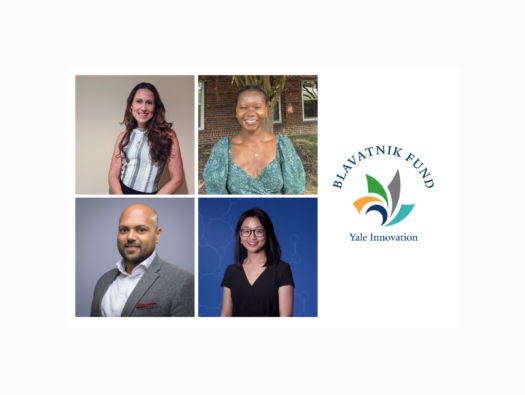
Moving a life sciences discovery from a laboratory toward patients takes more than promising data. Faculty teams must identify the evidence needed to advance a technology, understand where it could fit in the market, and make decisions about development, funding, and the people needed to carry the work forward. At Yale, Blavatnik Fellows work alongside faculty and Yale Ventures through that process. The one-year Blavatnik Fellowship brings life science professionals into Yale and New Haven’s entrepreneurial ecosystem. Since 2018, the Blavatnik Fellowship at Yale has welcomed 31 fellows across nine cohorts. Fellows help faculty teams assess the commercial potential of their research and turn early ideas into development plans. Yale Ventures’ current Blavatnik fellows Rena Yan, PhD; Nancy Sey, PhD; Ronak Savla, PhD; and Laura Stevens, PhD, are working across oncology, diagnostics, neurodegenerative disease, and women’s health. They shared what drew them to the fellowship and what they have learned about translating research.
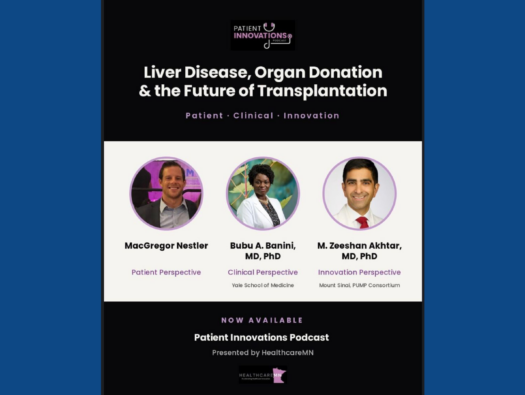
Patient Innovations Podcast: Liver Disease, Organ Donation & the Future of Transplantation
The Blavatnik Family Foundation supports Mount Sinai’s work to advance organ-perfusion technology and related research designed to preserve donated organs, improve their viability, and expand access to transplantation. In this episode of Patient Innovations, hosts Rashmi Kandwal and Shannon Stauff bring together patient, clinical, and research perspectives on liver disease, organ donation, and the future of transplantation. Liver transplant recipient MacGregor Nestler reflects on his experience of serious illness, waiting for a donor organ, and rebuilding his life after transplantation. Dr. Bubu A. Banini of Yale School of Medicine and the American Liver Foundation discusses the varied causes of liver disease, the importance of early awareness, and the value of trusted support for patients and families. Dr. M. Zeeshan Akhtar of Mount Sinai’s Recanati/Miller Transplantation Institute explores advances in machine perfusion and the emerging role of artificial intelligence in evaluating donated organs. The conversation highlights how research, technology, and public awareness can help increase the availability of viable organs and improve outcomes for transplant patients.
3 Yale Women Recognized Among 2026 Women of Innovation Finalists
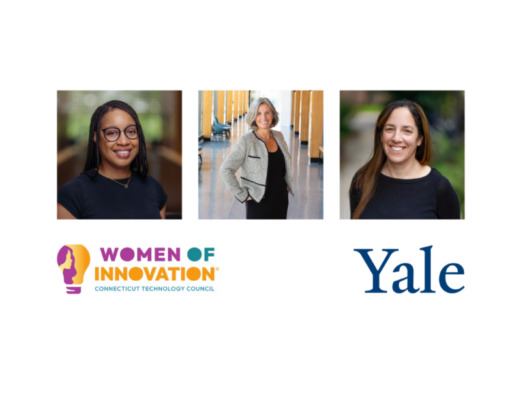
Morag Grassie, Ph.D., Executive Director of the Blavatnik Fund for Innovation at Yale, has been named a 2026 Women of Innovation finalist by the Connecticut Technology Council. Recognized in the Academic Innovation and Leadership—Post-Secondary category, Grassie leads the Fund’s work to help translate promising Yale research into life-science innovations. She is also a co-founder of amplifyHERscience, a Yale Ventures program supporting academic founders across the university. The recognition reflects her sustained leadership in strengthening pathways from scientific discovery to real-world impact. Grassie is one of three Yale finalists, alongside Sparkle Malone and Julie Zimmerman, both recognized for their contributions to environmental research and sustainability. Award recipients will be announced at the Women of Innovation ceremony on October 27, 2026.
Harvard Business School Announces Its 2026-2027 Blavatnik Fellows
Harvard Business School has announced the five members of the 2026–2027 Blavatnik Fellowship in Life Science Entrepreneurship, the program’s thirteenth cohort. Russell Beckerman, Parisa Farzam, Mahmoud Mikdar, Nora Rodden, and Anna Trepekli are developing ventures spanning precision medicines for obesity, real-time brain monitoring, engineered red blood cells, digital support for chronic symptoms, and virtual pediatric obesity care. During the 12-month fellowship, they will receive mentorship, strategic guidance, and access to Harvard’s entrepreneurial and scientific resources as they advance their technologies and leadership. Since its launch in 2013, the program’s fellows have founded 50 biomedical companies working across therapeutics, cell and gene technologies, drug delivery, and digital health. Supported by the Blavatnik Family Foundation, the Fellowship helps translate promising life science discoveries into ventures that can improve patients’ lives. The new cohort continues its mission of equipping emerging life science leaders with the resources, networks, and professional development needed to move breakthrough ideas toward real-world impact.
Evogene and Tel Aviv University’s Blavatnik Center for Drug Discovery Announce Joint Initiative to Accelerate AI-Driven Small-Molecule Drug Discovery
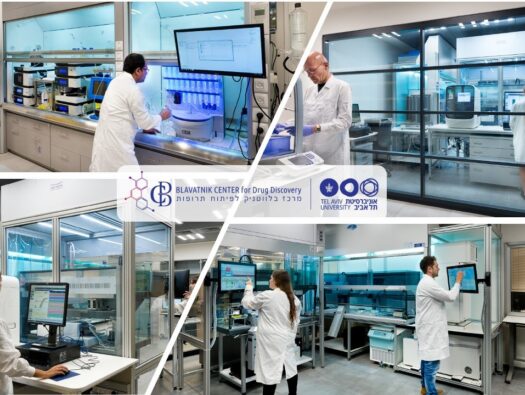
Evogene and Tel Aviv University’s Blavatnik Center for Drug Discovery have announced a strategic initiative to accelerate AI-driven small-molecule drug discovery emerging from Israel’s academic research ecosystem. Facilitated by Ramot, Tel Aviv University’s technology transfer company, the collaboration is designed to support researchers and scientific entrepreneurs working on novel disease targets. The initiative combines the Blavatnik Center for Drug Discovery’s experimental infrastructure and translational drug discovery capabilities with Evogene’s computational chemistry platform, including its ChemPass AI™ generative engine. Selected projects will receive support through an integrated design, make, test, and analyze workflow intended to help move promising biological insights toward viable drug development programs. By bringing together academic science, experimental validation, and AI-enabled molecule design, the collaboration addresses a critical gap in early-stage therapeutic innovation. The initiative reflects the Blavatnik Center’s mission to advance pioneering medical research from the laboratory toward potential patient benefit.
Nine Breakthrough Projects Selected for 2026 Blavatnik Accelerator Awards
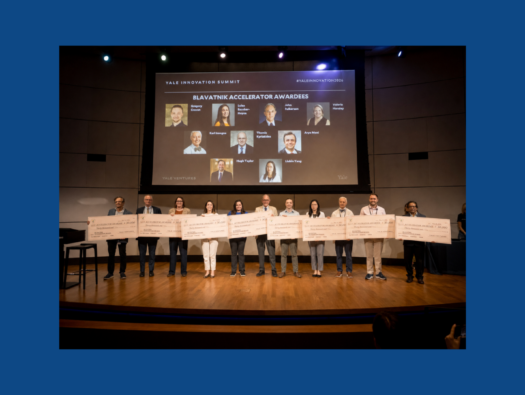
The Blavatnik Fund for Innovation at Yale has announced nine recipients of its 2026 Accelerator Awards, supporting early-stage life science research with strong translational potential. The awards provide funding and mentorship to help Yale researchers generate validation data and advance discoveries toward future development. This year’s cohort spans women’s health, oncology, gastroenterology, immunology, orthopedics, reproductive health, metabolic disease, and regenerative medicine. The projects focusing on women’s health include approaches to continuous estrogen monitoring, endometriosis, post-menopausal osteoporosis, and fertility preservation. Selected through a competitive review and pitch process, the awards help promising faculty move breakthrough ideas closer to practical application. The program reflects the Foundation’s commitment to accelerating scientific innovation and helping university research address urgent health challenges.
Stanford Scientists Reverse Age-Related Memory Loss by Targeting the Gut
A new Stanford Medicine study, partly supported by the Blavatnik Family Fellowship Fund at the Stanford University School of Medicine, suggests that age-related memory decline may be influenced not only by changes in the brain, but also by changes in the gut. Published in Nature, the study found that shifts in the gut microbiome of older mice can trigger gastrointestinal inflammation, disrupting signals sent through the vagus nerve to the hippocampus, a brain region central to memory formation. When young mice were exposed to older microbiomes, they showed declines in memory and navigation; when researchers restored gut-brain communication in older mice, memory performance improved. The findings identify a pathway linking gastrointestinal aging, immune response, vagus nerve activity, and hippocampal function. Although the research was conducted in mice, it points to new ways of understanding cognitive decline through the gut-brain connection.
By Studying Fruit Flies, Rachel Wilson Is Changing How We Understand the Brain
Harvard Medicine profiles Rachel Wilson, the Joseph B. Martin Professor of Basic Research in the Field of Neurobiology in the Blavatnik Institute at Harvard Medical School, whose work with fruit flies is advancing understanding of how nervous systems produce behavior. For more than two decades, Wilson has helped pioneer techniques that allow researchers to observe activity in individual neurons as fruit flies sense, move, and navigate their environments. Her lab’s research has revealed important principles of sensory processing, internal navigation, and the neural circuits that help animals understand where they are and where to go next. At the Blavatnik Institute at HMS, Wilson is also contributing to the field of connectomics, using detailed maps of the fruit fly nervous system to study how distributed neural networks give rise to coordinated action. Wilson was also a 2014 Laureate in Life Sciences in the inaugural Blavatnik National Awards for Young Scientists. Her work reflects the Foundation’s commitment to supporting exceptional scientists and institutions pursuing fundamental discoveries about biology, behavior, and human health.
Mount Sinai Health System Launches Women’s Health Video Podcast HERology
Mount Sinai Health System has launched HERology, a new women’s health video podcast designed to offer accessible, expert-led conversations on care across the lifespan and powered by the Carolyn Rowan Center for Women’s Health and Wellness, which is opening in May 2026 on Manhattan’s Upper East Side. The show is cohosted by Joanne L. Stone, MD, along with Leslee Shaw, PhD, Director of the Blavatnik Family Women’s Health Research Institute, and Anna Barbieri, MD, with Anuradha Lala, MD, serving as a contributing co-host. The launch reflects Mount Sinai’s broader effort to connect clinical expertise, research, and public education in women’s health through a multidisciplinary platform. The podcast will be released every two weeks across major streaming platforms, extending Mount Sinai’s outreach beyond the clinical setting.
Learn More
Discover the cutting-edge science we fund
Providing many of the world's best researchers, scientists, and universities with support, and funding to discover breakthroughs that solve humankind's greatest challenges.
See how we support great cultural institutions around the world
The Foundation contributes to renowned institutions that showcase the breadth of arts and culture, including performance, exhibition and education.
Visit the Blavatnik Archive
The Blavatnik Archive is a nonprofit foundation dedicated to preserving and disseminating materials that contribute to the study of 20th-century Jewish and world history, with a special emphasis on World War I, World War II, and Soviet Russia.