Skip to content
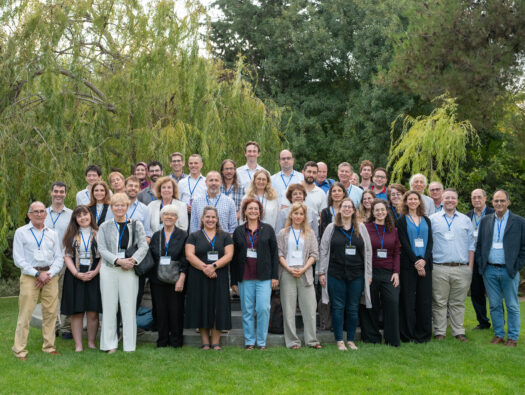
The Blavatnik Family Foundation and The New York Academy of Sciences today named 18 Finalists for the 2026 Blavatnik National Awards for Young Scientists. The Awards recognize scientific advances made by researchers in the United States across the following disciplines: Life Sciences, Chemical…
Three Young Scientists Win 2026 Blavatnik Regional Awards for Postdoctoral Excellence

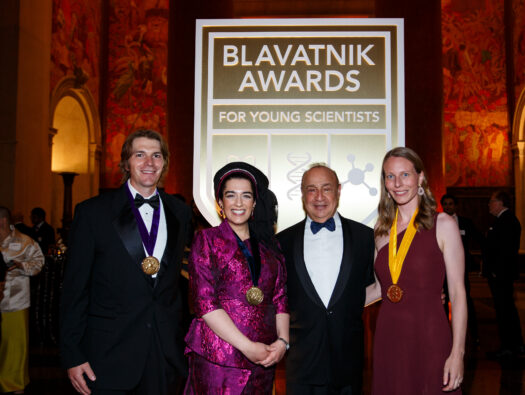
The Blavatnik Family Foundation and The New York Academy of Sciences have announced the 2026 Blavatnik Regional Awards for Young Scientists, recognizing three Laureates and six Finalists for postdoctoral research across New York, New Jersey, and Connecticut. Selected from 176 nominations representing 35 academic and research institutions, the honorees span the Chemical Sciences, Life Sciences, and Physical Sciences & Engineering. Trevor van Eeuwen of The Rockefeller University was named Chemical Sciences Laureate for research on mobile DNA elements and their connections to immune responses, autoimmune disease, and cancer. Barbara Bosch, also of The Rockefeller University, received the Life Sciences honor for developing scalable methods to identify bacterial inhibitors, including those targeting Mycobacterium tuberculosis. Natalie Fardian-Melamed of Columbia University was named Physical Sciences & Engineering Laureate for light-based nanosensors with potential applications in biomedicine, robotics, and quantum technologies. Six Finalists were also recognized for work spanning gene transcription, quantum materials, RNA regulation, aging, cosmological simulations, and supermassive black holes, and all nine honorees will be celebrated at the annual Blavatnik Awards ceremony on October 6, 2026, in New York.

Blavatnik Regional Awards for Young Scientists Announce 2026 Honorees

The Blavatnik Family Foundation and The New York Academy of Sciences today announced the nine recipients of the 2026 Blavatnik Regional Awards for Young Scientists, recognizing three Laureates and six Finalists whose postdoctoral research exemplifies the extraordinary scientific excellence found across the Tri-State area of New York, New Jersey, and Connecticut. The Blavatnik Regional Awards honor outstanding postdoctoral researchers in Chemical Sciences, Life Sciences, and Physical Sciences & Engineering. A distinguished jury of scientists and engineers selected one Laureate per category, each receiving a $30,000 unrestricted award, along with two Finalists per category, each receiving $10,000 in unrestricted funds. Chosen from 176 nominations representing 35 academic and research institutions, this year's honorees are advancing discoveries that deepen scientific understanding and open new pathways for innovation. The announcement coincides with the National Postdoctoral Association’s 17th annual celebration of National Postdoc Appreciation Week, which recognizes the significant contributions that postdoctoral scholars make to research and discovery.

Becoming America: How Science Shaped a Nation

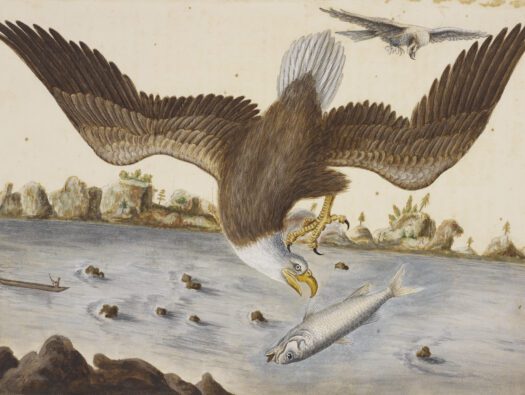
A new feature in The Past explores Becoming America: How Science Shaped a Nation, a free exhibition at London’s Science Museum supported by the Blavatnik Family Foundation as a major funder. Opening on October 23, 2026, the exhibition examines how science and technology shaped the land, peoples, and emerging identity of the United States during the decisive decades from the 1760s to the 1790s. The feature highlights the knowledge and experiences of Anglo-American colonists, Indigenous nations, and enslaved and free people of African descent, and the ways their distinct scientific practices intersected amid colonization and political change. Examples range from Indigenous navigation and canoe-making and African expertise in rice cultivation to Benjamin Franklin’s mapping of the Gulf Stream and the surveying of the Mason-Dixon Line. It also considers scientific influences on the Declaration of Independence and the role of agriculture and natural history in shaping national identity. Running through April 25, 2027, the exhibition offers free public access to a multifaceted account of how science both shaped—and was changed by—the emergence of the United States.

Berkeley Lab’s Jain Named a Finalist in Blavatnik National Awards for Young Scientists

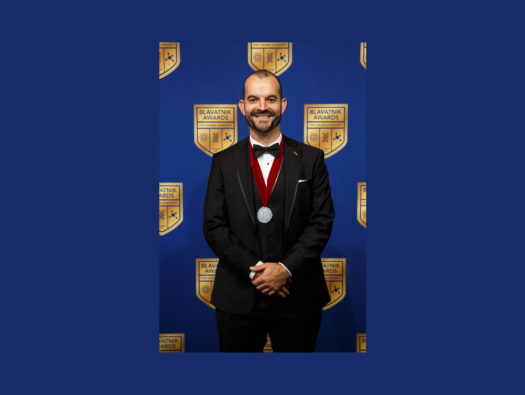
Anubhav Jain, a senior scientist at Lawrence Berkeley National Laboratory, has been named a finalist in the chemical sciences category of the 2026 Blavatnik National Awards for Young Scientists. His research group in Berkeley Lab’s Energy Technologies Area combines theory, computational methods, and artificial intelligence to accelerate the design of new materials. Jain was recognized for developing AI-driven platforms and autonomous-laboratory tools that advance discoveries in batteries, energy conversion, catalysis, and other emerging technologies. He is one of 18 finalists selected from 372 nominees representing 187 academic and research institutions across the United States. Jain also directs FORUM-AI, a multi-institutional initiative that uses supercomputers and AI to speed the discovery of materials for batteries, thermal applications, and other energy technologies. The 2026 laureates will be announced on October 6 at the American Museum of Natural History in New York.

Learn More

Discover the cutting-edge science we fund

Providing many of the world's best researchers, scientists, and universities with support, and funding to discover breakthroughs that solve humankind's greatest challenges.

See how we support great cultural institutions around the world

The Foundation contributes to renowned institutions that showcase the breadth of arts and culture, including performance, exhibition and education.

Visit the Blavatnik Archive

The Blavatnik Archive is a nonprofit foundation dedicated to preserving and disseminating materials that contribute to the study of 20th-century Jewish and world history, with a special emphasis on World War I, World War II, and Soviet Russia.

Blavatnik Family Foundation
Privacy Overview

This website uses cookies so that we can provide you with the best user experience possible. Cookie information is stored in your browser and performs functions such as recognising you when you return to our website and helping our team to understand which sections of the website you find most interesting and useful.

You can find more information by this link