Skip to content

Blavatnik Awards

In TIME, Nicholas B. Dirks, president and CEO of the New York Academy of Sciences, makes the case for investing in scientists, not just projects. He highlights the Blavatnik Awards for Young Scientists as a model of unrestricted support.…
We Blasted a Mobile Home with 110 mph Winds to Find Out How to Keep People Safe

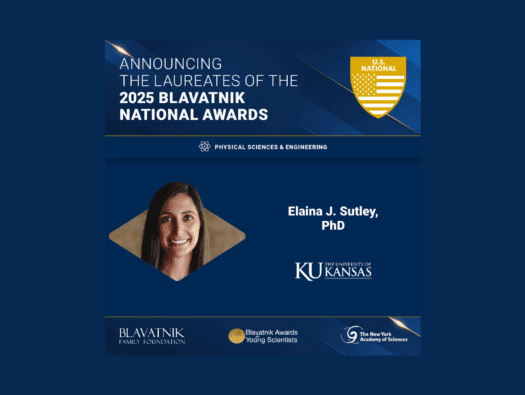
Elaina Sutley, the 2025 Blavatnik Award Laureate in Physical Sciences and Engineering, is investigating how to make manufactured homes safer in extreme winds without compromising affordability. In an article co-authored with Arindam Chowdhury, she describes first-of-their-kind, full-scale tests at Florida International University’s Wall of Wind facility, examining three manufactured homes and seven installation systems. Preliminary findings revealed weaknesses in commonly used installation systems, while showing that homes built above federal strength requirements and secured with robust anchoring performed well in winds exceeding 110 mph. The research combines laboratory experiments, post-disaster investigations and community engagement to identify practical improvements in construction and installation. Sutley and her colleagues have also worked with the Federal Emergency Management Agency to improve installation practices for post-disaster temporary housing and are developing guidance for state and local governments. Their work highlights the potential for stronger building standards and better installation practices to protect the more than 22 million Americans who live in manufactured housing.

Three Scientists Honored with $250,000 Blavatnik Awards for Breakthroughs in Organic Chemistry, Gene Editing and Bioelectronics

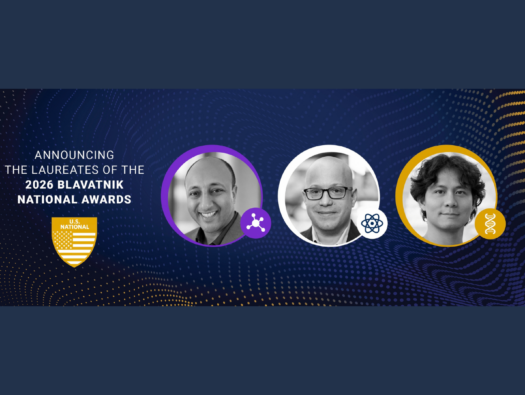
Three exceptional scientists each received $250,000 – the largest unrestricted scientific award available to early-career scientists in the United States – at the 2026 ceremony of the Blavatnik Awards for Young Scientists for their work in organic chemistry, genome engineering, and bioelectronics. Presented by the Blavatnik Family Foundation and The New York Academy of Sciences, the Awards honor America’s most innovative faculty-rank scientists and engineers, aged 42 and younger. The 2026 Laureates were selected from a highly competitive pool of 372 nominees representing 187 academic and research institutions across 43 states. From this national pool, an independent jury of eminent scientists also selected 15 Finalists who each received $15,000 in unrestricted funding. The winners of the 2026 Blavatnik National Awards for Young Scientists were announced at the 20th anniversary gala ceremony held at the American Museum of Natural History on October 6, 2026, hosted by Len and Emily Blavatnik and presented by Robert P. Lifton, MD, PhD, President of The Rockefeller University. David Nagib (The Ohio State University) is the Chemical Sciences laureate, Patrick Hsu (Arc Institute and Stanford University) is the Life Sciences laureate, and Jonathan Rivnay (Northwestern University) is the Physical Sciences & Engineering laureate.

Three Young Scientists Win 2026 Blavatnik Regional Awards for Postdoctoral Excellence

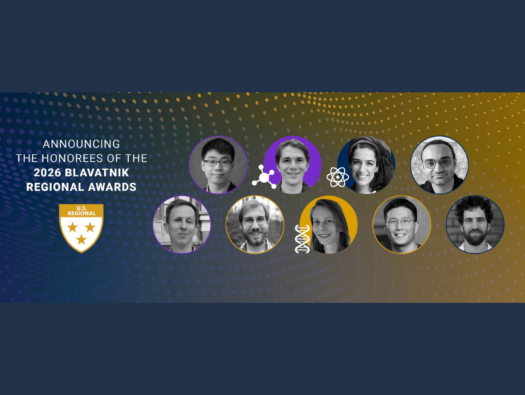
The Blavatnik Family Foundation and The New York Academy of Sciences have announced the 2026 Blavatnik Regional Awards for Young Scientists, recognizing three Laureates and six Finalists for postdoctoral research across New York, New Jersey, and Connecticut. Selected from 176 nominations representing 35 academic and research institutions, the honorees span the Chemical Sciences, Life Sciences, and Physical Sciences & Engineering. Trevor van Eeuwen of The Rockefeller University was named Chemical Sciences Laureate for research on mobile DNA elements and their connections to immune responses, autoimmune disease, and cancer. Barbara Bosch, also of The Rockefeller University, received the Life Sciences honor for developing scalable methods to identify bacterial inhibitors, including those targeting Mycobacterium tuberculosis. Natalie Fardian-Melamed of Columbia University was named Physical Sciences & Engineering Laureate for light-based nanosensors with potential applications in biomedicine, robotics, and quantum technologies. Six Finalists were also recognized for work spanning gene transcription, quantum materials, RNA regulation, aging, cosmological simulations, and supermassive black holes, and all nine honorees will be celebrated at the annual Blavatnik Awards ceremony on October 6, 2026, in New York.

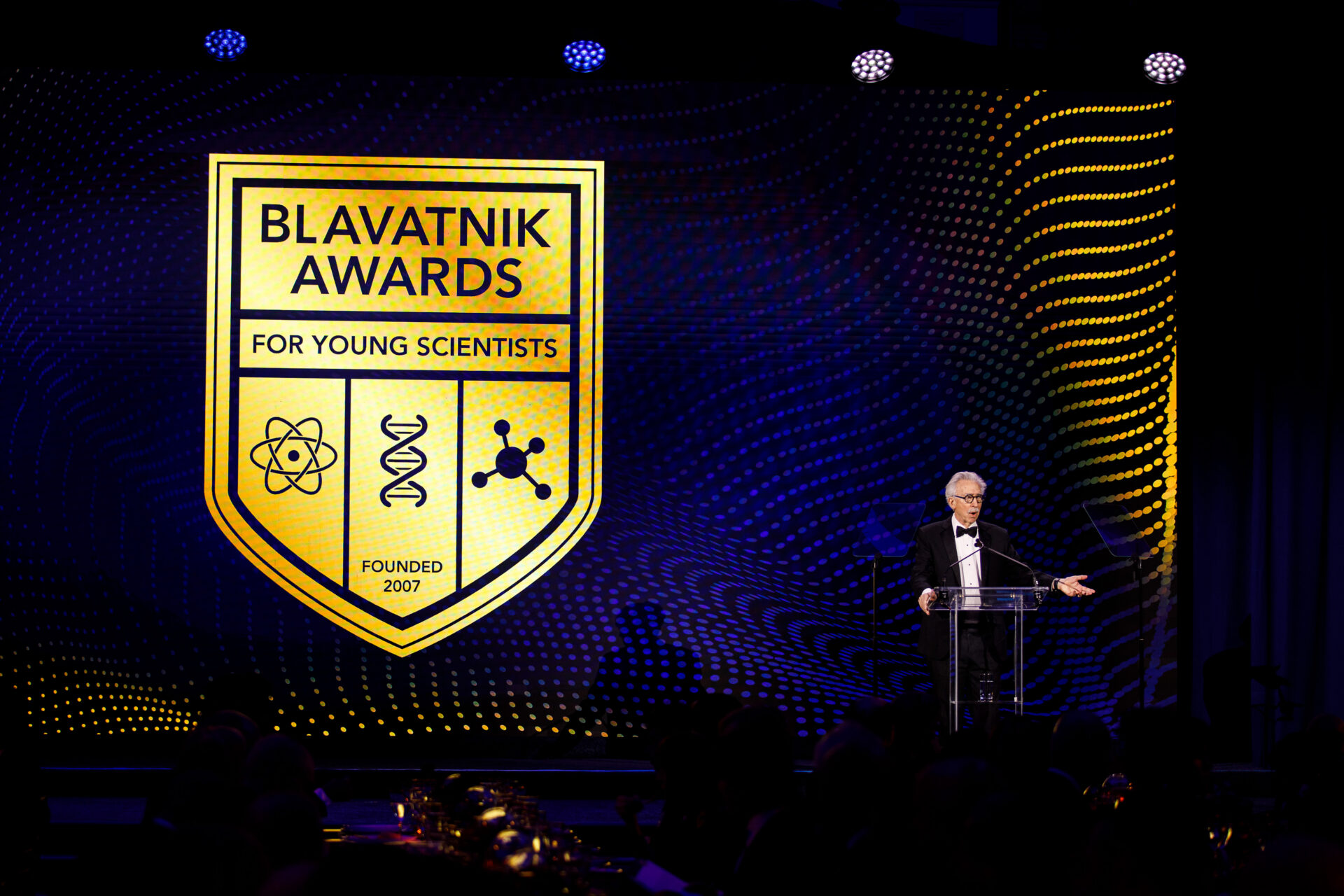
Blavatnik Regional Awards for Young Scientists Announce 2026 Honorees

The Blavatnik Family Foundation and The New York Academy of Sciences today announced the nine recipients of the 2026 Blavatnik Regional Awards for Young Scientists, recognizing three Laureates and six Finalists whose postdoctoral research exemplifies the extraordinary scientific excellence found across the Tri-State area of New York, New Jersey, and Connecticut. The Blavatnik Regional Awards honor outstanding postdoctoral researchers in Chemical Sciences, Life Sciences, and Physical Sciences & Engineering. A distinguished jury of scientists and engineers selected one Laureate per category, each receiving a $30,000 unrestricted award, along with two Finalists per category, each receiving $10,000 in unrestricted funds. Chosen from 176 nominations representing 35 academic and research institutions, this year's honorees are advancing discoveries that deepen scientific understanding and open new pathways for innovation. The announcement coincides with the National Postdoctoral Association’s 17th annual celebration of National Postdoc Appreciation Week, which recognizes the significant contributions that postdoctoral scholars make to research and discovery.

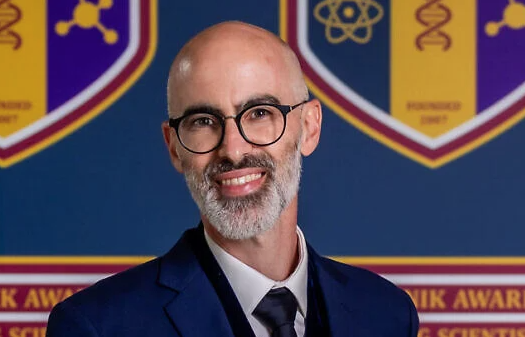
Berkeley Lab’s Jain Named a Finalist in Blavatnik National Awards for Young Scientists

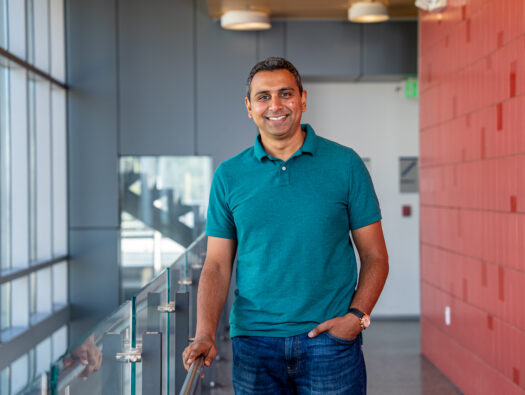
Anubhav Jain, a senior scientist at Lawrence Berkeley National Laboratory, has been named a finalist in the chemical sciences category of the 2026 Blavatnik National Awards for Young Scientists. His research group in Berkeley Lab’s Energy Technologies Area combines theory, computational methods, and artificial intelligence to accelerate the design of new materials. Jain was recognized for developing AI-driven platforms and autonomous-laboratory tools that advance discoveries in batteries, energy conversion, catalysis, and other emerging technologies. He is one of 18 finalists selected from 372 nominees representing 187 academic and research institutions across the United States. Jain also directs FORUM-AI, a multi-institutional initiative that uses supercomputers and AI to speed the discovery of materials for batteries, thermal applications, and other energy technologies. The 2026 laureates will be announced on October 6 at the American Museum of Natural History in New York.

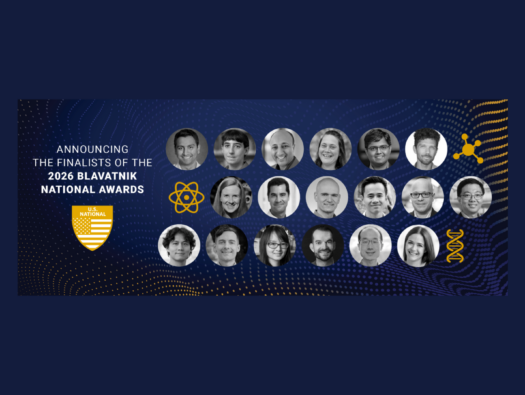
Finalists announced for the 2026 Blavatnik National Awards for Young Scientists

The Blavatnik Family Foundation and The New York Academy of Sciences today named 18 Finalists for the 2026 Blavatnik National Awards for Young Scientists. The Awards recognize scientific advances made by researchers in the United States across the following disciplines: Life Sciences, Chemical Sciences, and Physical Sciences & Engineering. The 2026 Blavatnik National Awards Laureates will be announced on October 6, 2026, during the Blavatnik Awards ceremony at the American Museum of Natural History in New York. Each Laureate will receive a prize of $250,000 — the largest unrestricted scientific award available to early-career scientists in the United States. The remaining 15 Finalists will each receive $15,000 in recognition of their outstanding achievements. This year's Finalists were selected by an independent jury of distinguished scientists. In total, 372 young scientists were nominated, representing 187 academic and research institutions across 43 states and the District of Columbia.

STEMcast Episode 42 | Learning to Learn: Exploring how Artificial and Biological Systems Learn with Prof. Andrew Saxe

What can mathematics reveal about how children, brains, and artificial neural networks learn? In this episode of STEMcast, Andrew Saxe—a 2025 Blavatnik Awards for Young Scientists in the UK honoree and neuroscientist at University College London—discusses his search for principles that apply across biological and artificial systems. He considers the two-way relationship between what can be learned and the processes through which learning occurs. Drawing on work in language development, knowledge generalization, and memory formation, Saxe explains how relatively simple mathematical models can illuminate complex behavior. The conversation also examines large language models, hierarchical learning, and the ways experience can shape language. Saxe concludes by reflecting on collaboration between theorists and experimentalists and NeuroAI’s role in connecting neuroscience and artificial intelligence.

By Studying Fruit Flies, Rachel Wilson Is Changing How We Understand the Brain

Harvard Medicine profiles Rachel Wilson, the Joseph B. Martin Professor of Basic Research in the Field of Neurobiology in the Blavatnik Institute at Harvard Medical School, whose work with fruit flies is advancing understanding of how nervous systems produce behavior. For more than two decades, Wilson has helped pioneer techniques that allow researchers to observe activity in individual neurons as fruit flies sense, move, and navigate their environments. Her lab’s research has revealed important principles of sensory processing, internal navigation, and the neural circuits that help animals understand where they are and where to go next. At the Blavatnik Institute at HMS, Wilson is also contributing to the field of connectomics, using detailed maps of the fruit fly nervous system to study how distributed neural networks give rise to coordinated action. Wilson was also a 2014 Laureate in Life Sciences in the inaugural Blavatnik National Awards for Young Scientists. Her work reflects the Foundation’s commitment to supporting exceptional scientists and institutions pursuing fundamental discoveries about biology, behavior, and human health.

Bucking Boycotts, Prizewinning Israeli Astrophysicist Finds ‘Zen-like’ Perspective in Space

Astrophysicist Paz Beniamini, an associate professor of physics at the Open University of Israel, has been named a 2026 Blavatnik Awards for Young Scientists in Israel Laureate in Physical Sciences & Engineering. Beniamini, who heads the university’s Astrophysics Research Center, was recognized for research into some of the universe’s most energetic phenomena, including fast radio bursts, gamma-ray bursts, and highly magnetized neutron stars. His work explores extreme environments where particles move at extraordinary speeds and magnetic fields far exceed those found on Earth. The recognition marks the first Blavatnik Award for the Open University of Israel, highlighting the strength of its growing research community and astrophysics program. The article also emphasizes Beniamini’s commitment to international scientific collaboration and to education as a foundation for future discovery. Through the Awards, the Blavatnik Family Foundation helps recognize exceptional early-career scientists whose research expands understanding of the natural world and inspires the next generation.

Learn More

Discover the cutting-edge science we fund

Providing many of the world's best researchers, scientists, and universities with support, and funding to discover breakthroughs that solve humankind's greatest challenges.

See how we support great cultural institutions around the world

The Foundation contributes to renowned institutions that showcase the breadth of arts and culture, including performance, exhibition and education.

Visit the Blavatnik Archive

The Blavatnik Archive is a nonprofit foundation dedicated to preserving and disseminating materials that contribute to the study of 20th-century Jewish and world history, with a special emphasis on World War I, World War II, and Soviet Russia.

Blavatnik Family Foundation
Privacy Overview

This website uses cookies so that we can provide you with the best user experience possible. Cookie information is stored in your browser and performs functions such as recognising you when you return to our website and helping our team to understand which sections of the website you find most interesting and useful.

You can find more information by this link