Skip to content

Scientific Research

Aegis Ventures and Wavelet Medical Aim to Redefine the Standard of Care in Fetal Medicine

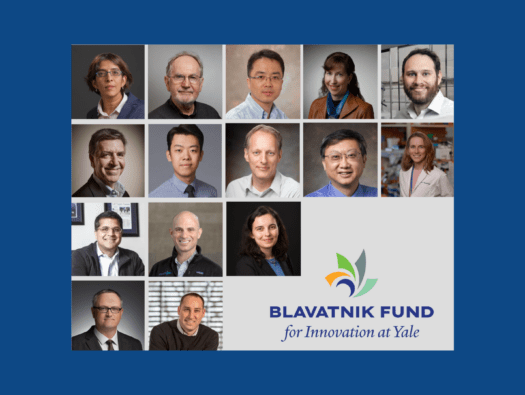
Wavelet Medical has partnered with Aegis Ventures to advance a non-invasive, AI-powered fetal brain monitoring platform that detects fetal distress in real time and helps prevent avoidable brain injury at birth. The collaboration, supported by $7 million in seed funding, aims to advance the technology from laboratory research to broader clinical testing and commercialization, with the goal of improving outcomes for both mothers and babies while reducing unnecessary interventions. It's a significant step toward a more precise and preventive standard of care in fetal medicine, with Wavelet already being tested at three clinical sites and preparing for expanded trials. Wavelet received the Blavatnik Fund for Innovation at Yale Award in 2023, an accelerator managed by Yale Ventures, which supported its early development.
How Yale Ventures is ‘Accelerating’ Innovation

Yale News recently highlighted how Yale Ventures is helping move academic research toward real-world application, with the Blavatnik Fund for Innovation at Yale supporting faculty-led work in the life sciences as part of that broader effort. Since its founding in 2017, the Fund has supported 98 projects and awarded $24 million, helping pair promising research with the practical guidance, mentorship, and translational support needed to advance ideas beyond the lab.

‘I think I know how to fix this.’

A Harvard Medical School team led by Andrew Kruse has engineered a longer-lasting form of the hormone relaxin—an approach that could help address heart failure with preserved ejection fraction (HFpEF), a hard-to-treat condition affecting roughly 1 million people in the U.S. By converting relaxin from a two-chain to a one-chain molecule and fusing it to an antibody Fc-domain to extend its half-life, the researchers advanced a promising concept toward therapeutic use, with support from Harvard’s Office of Technology Development and the Blavatnik Biomedical Accelerator through pilot and development funding and business guidance. That early translational backing helped de-risk the science, enabling Kruse to license the technology and launch Tectonic Therapeutic, where the resulting candidate (TX45) is now in a Phase 2 clinical trial and being explored for pulmonary hypertension linked to heart failure and other serious cardiopulmonary conditions. As Kruse noted, “The Blavatnik Accelerator is really what allowed us to go from a pure research compound to something that was ultimately a clinical candidate.”

Blavatnik Fund for Innovation at Yale to Support 12 Life Sciences Projects in 2026 Spanning Oncology, Diagnostics, Neurology, Kidney and Liver Disease

The Blavatnik Fund for Innovation at Yale will support 12 faculty-led life sciences projects in 2026 that address critical challenges in oncology, neurodegeneration, diagnostics, and kidney and liver disease, advancing discoveries toward meaningful health outcomes for patients. Since 2017, the partnership between Yale and the Blavatnik Fund has supported more than 98 unique projects, spawned 46 new ventures, and enabled nine investigational new drug clearances, reflecting a sustained commitment to translating bold science into real-world solutions. Awardees in this cycle are pursuing innovations from novel therapeutics to next-generation diagnostics and platform technologies, each with the potential to reshape how disease is understood and treated. Yale’s Vice Provost for Research, Michael Crair, observed that “through the Blavatnik Fund for Innovation at Yale, we have built a robust ecosystem of entrepreneurs that helps faculty advance discoveries with real potential for societal impact.” He further emphasized that at a time when early-stage research investment is essential, the ongoing partnership with the Foundation “ensures that promising innovations do not stall in the lab” but move closer to patients.

AI Foundation Model Aims to Make Stem Cell Therapies More Predictable

Researchers at the Blavatnik Institute at Harvard Medical School are contributing to the development of a new artificial-intelligence “foundation model” to improve the predictability and reproducibility of stem cell research, a major hurdle in regenerative medicine. By analyzing large biological datasets, the model seeks to identify the underlying rules governing cell differentiation, helping scientists anticipate outcomes and reduce reliance on trial-and-error approaches. The work has led to the formation of Cellular Intelligence, which was co-founded by researchers in the Blavatnik Institute at Harvard Medical School to translate these insights into practical tools for the field. Early work benefited from shared space and infrastructure at the Blavatnik Harvard Life Lab Longwood, illustrating how supportive translational environments can help bridge discovery science and real-world application.

Lab to Market: Where Greek Research Meets Entrepreneurship

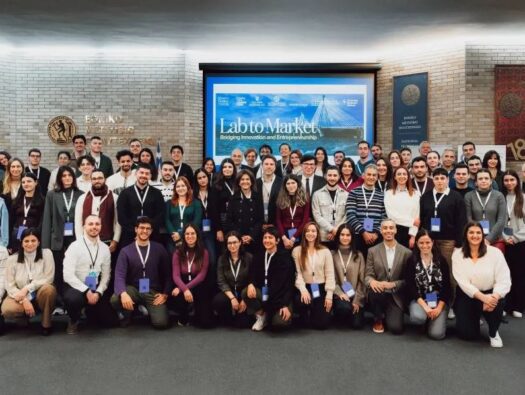
Supported by the Blavatnik Family Foundation, the Lab to Market: Bridging Innovation and Entrepreneurship program is enabling young researchers in Greece to translate scientific research into practical solutions with real-world potential. Implemented by the Columbia Global Center in Athens and overseen by Columbia University and the National Technical University of Athens, with the involvement of Columbia Business School, Endeavor Greece, and the Hellenic Institute for Advanced Studies (HIAS), the initiative brings together students and early-career researchers working on challenges ranging from microplastic exposure and medication management to earthquake resilience. Participants gain the knowledge, networks, and guidance needed to move from laboratory research to entrepreneurial application, with early projects already advancing to proof-of-concept stages.

From Greece to New York: Columbia and NTUA Join Forces for Innovation and Entrepreneurship

Columbia University and the National Technical University of Athens have launched Lab to Market: Bridging Innovation and Entrepreneurship, a five-year initiative that supports early-career researchers in translating academic work into viable, globally oriented ventures. Offered free of charge and implemented through the Columbia Global Center Athens, the program combines entrepreneurship education, mentoring and international networks, exposure to New York’s innovation ecosystem, and a competitive business plan pathway focused initially on artificial intelligence, energy and sustainability, and health technologies. With support from the Blavatnik Family Foundation, and in collaboration with partners including Columbia Business School, Endeavor Greece, and the Hellenic Institute for Advanced Studies, the initiative reflects a shared commitment to strengthening links between universities and the market—equipping a diverse cohort of young scientists across Greece with the skills, confidence, and connections needed to turn scientific excellence into meaningful economic and social impact.

Q&A: A Blavatnik Fellow’s Journey: Ying Kai Chan on Vision Science, Innovation, and Cirrus Therapeutics

Dr. Ying Kai Chan, a Blavatnik Fellow in Life Science Entrepreneurship at Harvard Business School, reflects on his path from academic immunology to co-founding Cirrus Therapeutics, a biotechnology company focused on developing new treatments for chronic blinding diseases. In a recent HBS interview, he describes how the Fellowship’s combination of scientific rigor, business training, and close mentorship helped him bridge the gap between discovery and application, equipping him to translate vision science into therapies with the potential to improve patients’ lives. Chan highlights the importance of interdisciplinary learning, trusted advisors, and a clear sense of purpose, noting that the Fellowship provided both the skills and the community needed to pursue innovation grounded in real human need.

How Testosterone Fell Out of Favor in Medicine — and How It Came Back

Dr. Abraham Morgentaler, a Blavatnik Faculty Fellow in Health and Longevity at Harvard Medical School, has played a pivotal role in reshaping the contemporary understanding of testosterone therapy. Once shunned over fears it fueled prostate cancer, testosterone treatment has been rehabilitated through decades of Morgentaler’s clinical work and research, which demonstrated its safety and meaningful benefits for men with low testosterone. His pioneering efforts helped overturn long-held misconceptions, leading to broader acceptance of testosterone therapy for appropriate patients and a renewed focus on evidence-based care.

Yale Life Science PitchFest 2025 Breaks Records in Attendance and Awards

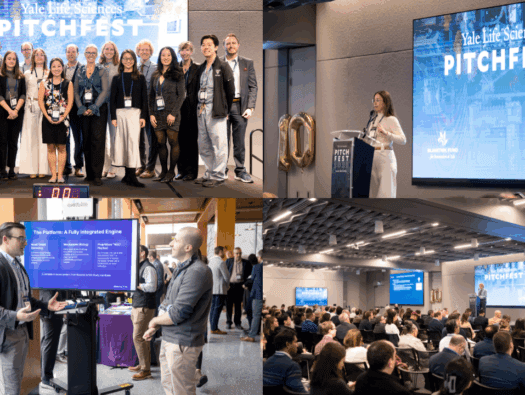
he 2025 Yale Life Science PitchFest showcased Yale’s most promising life science discoveries, from new ways to target tumors to breakthroughs in generative AI and novel biology. Thirty-three faculty-led teams presented new technologies under consideration for the Blavatnik Fund for Innovation at Yale, alongside 16 ePosters from Blavatnik-associated startups that highlighted the region’s accelerating life sciences momentum. The event drew more than 630 attendees—PitchFest’s largest audience to date. “PitchFest and the Blavatnik Fund continue to fuel the translation of Yale life sciences discoveries into real-world impact,” said Morag Grassie, director of the Fund. Over the last decade, the Blavatnik Fund has supported 98 projects and helped launch 47 ventures, collectively raising more than $486 million.

Learn More

Discover the cutting-edge science we fund

Providing many of the world's best researchers, scientists, and universities with support, and funding to discover breakthroughs that solve humankind's greatest challenges.

See how we support great cultural institutions around the world

The Foundation contributes to renowned institutions that showcase the breadth of arts and culture, including performance, exhibition and education.

Visit the Blavatnik Archive

The Blavatnik Archive is a nonprofit foundation dedicated to preserving and disseminating materials that contribute to the study of 20th-century Jewish and world history, with a special emphasis on World War I, World War II, and Soviet Russia.

Blavatnik Family Foundation
Privacy Overview

This website uses cookies so that we can provide you with the best user experience possible. Cookie information is stored in your browser and performs functions such as recognising you when you return to our website and helping our team to understand which sections of the website you find most interesting and useful.

You can find more information by this link