Skip to content

Scientific Research

Meet the Presenters: A First Look at the Yale Innovators Announced for the 2025 Yale Life Sciences Pitchfest

Yale Ventures is pleased to announce the 33 Yale faculty members who have been selected to present at the Yale Life Science Pitchfest on Thursday, December 4, 2025. Powered by The Blavatnik Fund for Innovation at Yale, the event will showcase groundbreaking research in therapeutics, medical devices, diagnostics, and digital health, with presenters delivering 5-minute pitches followed by 3-minute Q&A sessions to a panel of judges. The event will take place at 101 College Street in New Haven, CT. The annual event serves as the semifinals for The Blavatnik Fund for Innovation at Yale, an accelerator fund dedicated to advancing the commercialization of applied research and technology in the life sciences. On-the-day cash prizes will total $6,000 and up to an additional $60,000 in in-kind services. Attendees will also have opportunities to meet the presenters directly after each session.

The Blavatnik US-Israel Scientific Forum on Genome Medicine Over a Human Lifetime

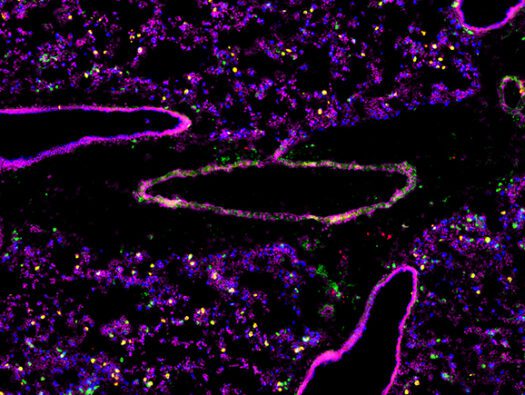
The 5th Blavatnik U.S.-Israel Scientific Forum: Genome Medicine Over a Human Lifetime, held October 22–23, 2025 in Washington, DC, brought leading researchers from the United States and Israel together to explore how advances in genomics are transforming human health across the lifespan—from the genetics of complex traits and neurodevelopmental disorders to cancer genomics, AI-driven genome analysis, genome stability, and emerging therapies for single-gene diseases. Through keynote talks, scientific sessions, and panel discussions, participants highlighted cutting-edge discoveries and their translation into precision medicine and public health. Hosted by the National Academy of Sciences and the Israel Academy of Sciences and Humanities, the Forum reflects the Blavatnik Family Foundation’s support for binational scientific cooperation and joint innovation between the two countries.

HMS Announces Blavatnik Institute Early Career Investigator Awards

Harvard Medical School has announced 10 recipients of the Blavatnik Institute Early Career Investigator Awards. Totaling $5 million, these grants are designed to fuel high-potential research conducted by some of the most exceptional junior faculty members — those within the first decade of their careers as principal investigators — on the HMS Quadrangle. The awards were made possible by ongoing support from the Blavatnik Family Foundation that aims to spur scientific advancement and transform those discoveries into new therapies and new tools to diagnose, prevent, and treat disease. “Thanks to the generosity of Len Blavatnik and the Blavatnik Family Foundation, we are enabling extraordinarily promising science at the most vulnerable stage in young investigators’ careers,” said HMS Dean George Q. Daley.

An AI System with Detailed Diagnostic Reasoning Makes Its Case

Researchers at Harvard Medical School are developing Dr. CaBot as a medical education tool. The system, which operates in both presentation and written formats, shows how it reasons through a case, offering what’s called a differential diagnosis — a comprehensive list of possible conditions that explain what’s going on — and narrowing down the possibilities until it reaches a final diagnosis. Dr. CaBot’s ability to spell out its “thought process” rather than focusing solely on reaching an accurate answer distinguishes it from other AI diagnostic tools. It is also one of only a few models designed to tackle more complex medical cases. “We wanted to create an AI system that could generate a differential diagnosis and explain its detailed, nuanced reasoning at the level of an expert diagnostician,” said Arjun (Raj) Manrai, assistant professor of biomedical informatics in the Blavatnik Institute at HMS. Manrai created Dr. CaBot with Thomas Buckley, a Harvard Kenneth C. Griffin School of Arts and Sciences doctoral student and a member of the Manrai lab.

Brown University Names Third Cohort of Blavatnik Family Fellows

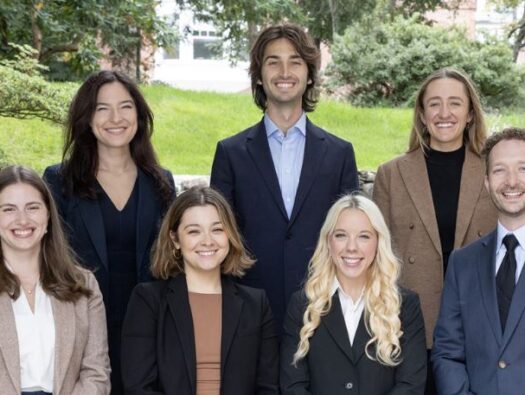
Brown University has announced the next cohort of students to receive the Blavatnik Family Graduate Fellowship in Biology and Medicine, which is made possible through a generous, multi-year donation from the Blavatnik Family Foundation. The eight Blavatnik Family Fellows were selected based on outstanding academic achievement and demonstrated potential for producing original research that advances scientific knowledge and understanding in the basic and clinical life sciences. The fellows are doctoral candidates in the Brown Division of Biology and Medicine’s graduate programs. “It’s a great pleasure to welcome the new Blavatnik Family Fellows, selected for their achievements to date and exceptional future promise. We look forward to their continued success and innovative research in the years ahead,” said Len Blavatnik, founder of Access Industries and the Blavatnik Family Foundation.

Speeding Discoveries from Lab to Patients

University labs play a vital role in advancing drug discovery and pharmaceutical innovation. Although these discoveries provide new solutions to medical challenges, improve patient outcomes, and promote economic growth, advancing them from the lab into clinical practice remains a major challenge. This highlights the need for sustained funding and support to deliver new therapies to patients. Helping to address this challenge, the Blavatnik Biomedical Accelerator (BBA) at Harvard supports the progression of translational biomedical research toward commercial and clinical applications. Established through a gift from the Blavatnik Family Foundation in 2013, the BBA has announced its latest cohort of awardees for 2025, supporting 10 biomedical technologies focused on tackling urgent medical challenges, including food allergies, genetic disorders, autoimmune diseases, metabolic disorders, and cancer.

The US–Israel Blavatnik Scientific Forum on Alleviating Global Water Scarcity by Desalination and Water Reuse

The US–Israel Blavatnik Scientific Forum on Alleviating Global Water Scarcity convened to discuss advancements and challenges in water desalination and reuse in Washington, DC, for a two-day meeting on September 10–11, 2024. The Blavatnik Family Foundation aims to foster scientific relationships, promote collaboration, and enhance cooperation between the United States and Israel. This partnership of the US National Academy of Sciences and Israel Academy of Sciences and Humanities, supported by the Blavatnik Family Foundation as part of its annual forum series, brought together leading scientists and engineers with the goal of highlighting research in both nations and to build collaboration between the scientific communities that are actively addressing this global challenge.

According to Harvard Scientists, This Missing Nutrient May Be the Key to Stopping Alzheimer’s

Study finds that lithium loss triggers Alzheimer’s, but a lithium-based compound reverses the disease in mice. What sets off the earliest chain of events that leads to Alzheimer’s disease? And why do some people who show Alzheimer’s-like brain changes never progress to dementia? These unresolved questions have challenged scientists for decades. Researchers at Harvard Medical School now believe they may have an explanation: a deficiency of lithium in the brain. “The idea that lithium deficiency could be a cause of Alzheimer’s disease is new and suggests a different therapeutic approach,” said senior author Bruce Yankner, professor of genetics and neurology in the Blavatnik Institute at HMS, who in the 1990s was the first to demonstrate that amyloid beta is toxic.

DNA from Ancient Bones Reveals How Indigenous Americans Got Their Mucus

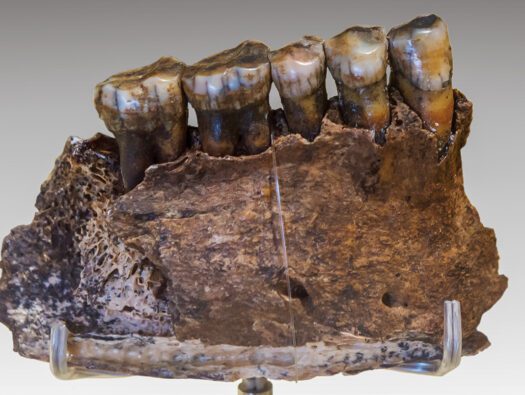
Mucus does more than simply rocket out of our noses when we sneeze. The sticky, viscous secretion that coats many organs also forms our innate immune system’s first line of defense, helping trap harmful pathogens. Now, scientists have tracked the winding evolutionary path this variant took from its origins in Denisovans—a mysterious ancient human ancestor—to our close cousins the Neanderthals and finally modern humans. David Peede, a recipient of the 2025 Blavatnik Family Graduate Fellowship in Biology and Medicine at Brown University, is one of the authors of a published paper in the journal Science, which sheds light on how a critical gene moved between different species or subspecies and the evolutionary forces that might have driven its spread.

HMS Announces Spike in Donations, $18 Million Pledge from Blavatnik as Trump Drains Research Funding

Harvard Medical School has pulled in a raft of small-dollar donations and a major gift from billionaire Leonard V. Blavatnik, who froze contributions in 2023 amid outcry over campus antisemitism, as the school faces steep federal funding cuts, its dean announced on Thursday. Blavatnik committed $18.86 million to continue an awards program for translational therapeutics research and launch a new funding pool for early-career researchers. $5.75 million of those funds will be earmarked for junior faculty conducting basic research at the HMS Quad.

Learn More

Discover the cutting-edge science we fund

Providing many of the world's best researchers, scientists, and universities with support, and funding to discover breakthroughs that solve humankind's greatest challenges.

See how we support great cultural institutions around the world

The Foundation contributes to renowned institutions that showcase the breadth of arts and culture, including performance, exhibition and education.

Visit the Blavatnik Archive

The Blavatnik Archive is a nonprofit foundation dedicated to preserving and disseminating materials that contribute to the study of 20th-century Jewish and world history, with a special emphasis on World War I, World War II, and Soviet Russia.

Blavatnik Family Foundation
Privacy Overview

This website uses cookies so that we can provide you with the best user experience possible. Cookie information is stored in your browser and performs functions such as recognising you when you return to our website and helping our team to understand which sections of the website you find most interesting and useful.

You can find more information by this link