Skip to content

Scientific Research

Speeding Discoveries from Lab to Patients

University labs play a vital role in advancing drug discovery and pharmaceutical innovation. Although these discoveries provide new solutions to medical challenges, improve patient outcomes, and promote economic growth, advancing them from the lab into clinical practice remains a major challenge. This highlights the need for sustained funding and support to deliver new therapies to patients. Helping to address this challenge, the Blavatnik Biomedical Accelerator (BBA) at Harvard supports the progression of translational biomedical research toward commercial and clinical applications. Established through a gift from the Blavatnik Family Foundation in 2013, the BBA has announced its latest cohort of awardees for 2025, supporting 10 biomedical technologies focused on tackling urgent medical challenges, including food allergies, genetic disorders, autoimmune diseases, metabolic disorders, and cancer.
The US–Israel Blavatnik Scientific Forum on Alleviating Global Water Scarcity by Desalination and Water Reuse

The US–Israel Blavatnik Scientific Forum on Alleviating Global Water Scarcity convened to discuss advancements and challenges in water desalination and reuse in Washington, DC, for a two-day meeting on September 10–11, 2024. The Blavatnik Family Foundation aims to foster scientific relationships, promote collaboration, and enhance cooperation between the United States and Israel. This partnership of the US National Academy of Sciences and Israel Academy of Sciences and Humanities, supported by the Blavatnik Family Foundation as part of its annual forum series, brought together leading scientists and engineers with the goal of highlighting research in both nations and to build collaboration between the scientific communities that are actively addressing this global challenge.

According to Harvard Scientists, This Missing Nutrient May Be the Key to Stopping Alzheimer’s

Study finds that lithium loss triggers Alzheimer’s, but a lithium-based compound reverses the disease in mice. What sets off the earliest chain of events that leads to Alzheimer’s disease? And why do some people who show Alzheimer’s-like brain changes never progress to dementia? These unresolved questions have challenged scientists for decades. Researchers at Harvard Medical School now believe they may have an explanation: a deficiency of lithium in the brain. “The idea that lithium deficiency could be a cause of Alzheimer’s disease is new and suggests a different therapeutic approach,” said senior author Bruce Yankner, professor of genetics and neurology in the Blavatnik Institute at HMS, who in the 1990s was the first to demonstrate that amyloid beta is toxic.

DNA from Ancient Bones Reveals How Indigenous Americans Got Their Mucus

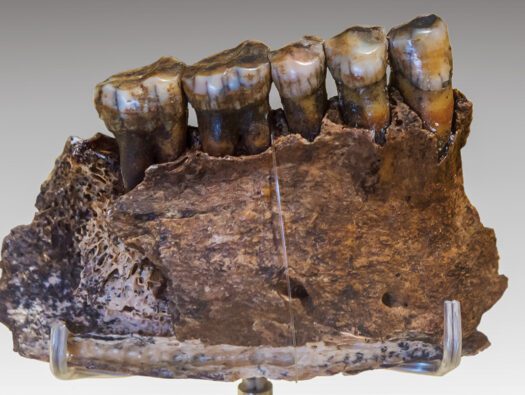
Mucus does more than simply rocket out of our noses when we sneeze. The sticky, viscous secretion that coats many organs also forms our innate immune system’s first line of defense, helping trap harmful pathogens. Now, scientists have tracked the winding evolutionary path this variant took from its origins in Denisovans—a mysterious ancient human ancestor—to our close cousins the Neanderthals and finally modern humans. David Peede, a recipient of the 2025 Blavatnik Family Graduate Fellowship in Biology and Medicine at Brown University, is one of the authors of a published paper in the journal Science, which sheds light on how a critical gene moved between different species or subspecies and the evolutionary forces that might have driven its spread.

HMS Announces Spike in Donations, $18 Million Pledge from Blavatnik as Trump Drains Research Funding

Harvard Medical School has pulled in a raft of small-dollar donations and a major gift from billionaire Leonard V. Blavatnik, who froze contributions in 2023 amid outcry over campus antisemitism, as the school faces steep federal funding cuts, its dean announced on Thursday. Blavatnik committed $18.86 million to continue an awards program for translational therapeutics research and launch a new funding pool for early-career researchers. $5.75 million of those funds will be earmarked for junior faculty conducting basic research at the HMS Quad.

Yale Researchers Develop Novel Antibody-RNA Therapy for Resistant Cancers

A specially engineered antibody capable of delivering RNA therapies to hard-to-reach, treatment-resistant tumors significantly shrank tumor size and improved survival in animal models, according to a study published July 16 in Science Translational Medicine. The study provides evidence that, once injected into the bloodstream, the antibody TMAB3, combined with a type of RNA that stimulates an innate immune reaction, can localize to tumors and penetrate and destroy stubborn diseased cells in pancreatic, brain, and skin cancers. The research reported in this news article was supported by the National Institutes of Health, the Damon Runyon Cancer Research Foundation; the American Association for Cancer Research; Pew Cancer Research Scholars; Cancer Research Institute-Clinic & Laboratory Integration Program (CLIP); Yale Cancer Center; Blavatnik Fund for Innovation at Yale; Gennao Bio Sponsored Research Grant to Yale; and Yale University.

Harvard Business School Announces Its 2025-2026 Blavatnik Fellows

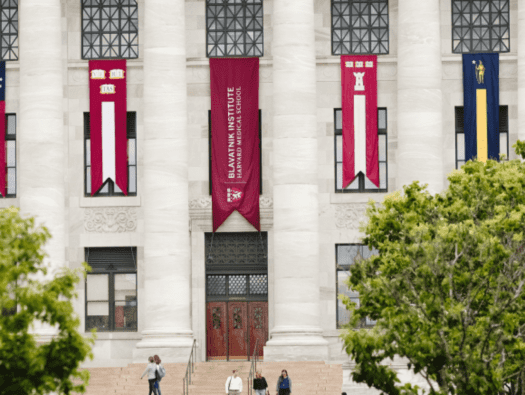
Harvard Business School (HBS) has named its 2025-26 Blavatnik Fellows and the program’s twelfth cohort. Launched in 2013, the Blavatnik Fellowship in Life Science Entrepreneurship is part of a gift to Harvard University from the Blavatnik Family Foundation. The Blavatnik Fellowship offers HBS alumni and Harvard-affiliated postdoctoral researchers the opportunity to advance new ventures around promising life science technologies and develop their leadership talents during a 12-month fellowship year.

Eight Translational Biotech Projects Selected for 2025 Blavatnik Accelerator Awards

The Blavatnik Fund for Innovation at Yale is pleased to announce the recipients of its 2025 Accelerator Awards, mid-cycle awards that support generating data for early-stage Yale life science research not typically funded by traditional research grants. This year’s awardees—eight research teams from across Yale—are addressing urgent challenges in cancer, ALS, inflammatory bowel disease, cardiovascular conditions, and rare genetic disorders and include innovative AI driven approaches to deliver faster drug development and better clinical trial outcomes.

‘Smoldering’ Cardiovascular Crisis

Overall rates of premature deaths related to cardiovascular disease is down about 70 percent since its 1968 peak. Still, heart disease remains the leading cause of death for Americans. With help from Harvard’s Office of Technology Development (OTD), the University patented the new molecule and licensed it to Tectonic Pharmaceuticals, a company Kruse founded. Fewer than five years after the original prototype, Tectonic is now testing an updated version of Erlandson’s molecule in Phase 2 clinical trials. Harvard’s Blavatnik Biomedical Accelerator provided funding and business development support to advance the technology toward commercialization. Other technologies aim to treat other advanced stages of heart disease. With funding support from Harvard’s Blavatnik Biomedical Accelerator, stem cell and regenerative biology professor Richard T. Lee and engineering professor Jia Liu are co-developing a flexible, tissue-like device designed to both detect and stop atrial fibrillation — an irregular heart rhythm that can lead to stroke and heart failure. “If you could stop it before it gets going, then you really have something,” Lee said.

Game-Changing $15 Million Gift Paves the Way for Future Biomedical Breakthroughs at NYU Langone

The Blavatnik Family Foundation’s Longtime Support of Pioneering Researcher Dr. Evgeny A. Nudler’s Work Holds Promise for Advances in Cancer Therapy, Antibiotic Resistance & Antiaging. NYU Langone Health today announced a $15 million gift from the Blavatnik Family Foundation to support research led by Evgeny A. Nudler, PhD, Julie Wilson Anderson Professor of Biochemistry in the Department of Biochemistry and Molecular Pharmacology and Investigator with the Howard Hughes Medical Institute. The gift will enable ongoing work in research areas that have already yielded decades of discoveries by Dr. Nudler’s team, including revelations on how genes are expressed and regulated, how bacteria resist antibiotics, and how cells execute continual DNA repair to prevent cancer and delay aging.

Learn More

Discover the cutting-edge science we fund

Providing many of the world's best researchers, scientists, and universities with support, and funding to discover breakthroughs that solve humankind's greatest challenges.

See how we support great cultural institutions around the world

The Foundation contributes to renowned institutions that showcase the breadth of arts and culture, including performance, exhibition and education.

Visit the Blavatnik Archive

The Blavatnik Archive is a nonprofit foundation dedicated to preserving and disseminating materials that contribute to the study of 20th-century Jewish and world history, with a special emphasis on World War I, World War II, and Soviet Russia.

Blavatnik Family Foundation
Privacy Overview

This website uses cookies so that we can provide you with the best user experience possible. Cookie information is stored in your browser and performs functions such as recognising you when you return to our website and helping our team to understand which sections of the website you find most interesting and useful.

You can find more information by this link