innovation
3 Yale Women Recognized Among 2026 Women of Innovation Finalists
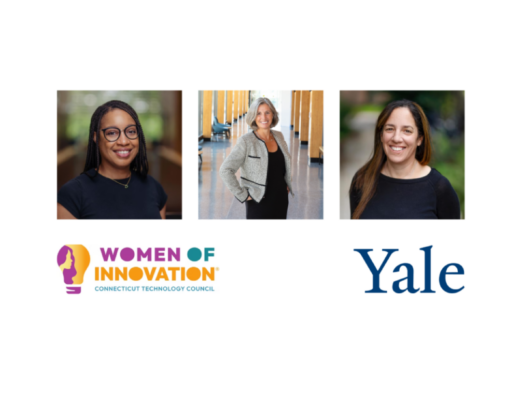
Morag Grassie, Ph.D., Executive Director of the Blavatnik Fund for Innovation at Yale, has been named a 2026 Women of Innovation finalist by the Connecticut Technology Council. Recognized in the Academic Innovation and Leadership—Post-Secondary category, Grassie leads the Fund’s work to help translate promising Yale research into life-science innovations. She is also a co-founder of amplifyHERscience, a Yale Ventures program supporting academic founders across the university. The recognition reflects her sustained leadership in strengthening pathways from scientific discovery to real-world impact. Grassie is one of three Yale finalists, alongside Sparkle Malone and Julie Zimmerman, both recognized for their contributions to environmental research and sustainability. Award recipients will be announced at the Women of Innovation ceremony on October 27, 2026.
Evogene and Tel Aviv University’s Blavatnik Center for Drug Discovery Announce Joint Initiative to Accelerate AI-Driven Small-Molecule Drug Discovery
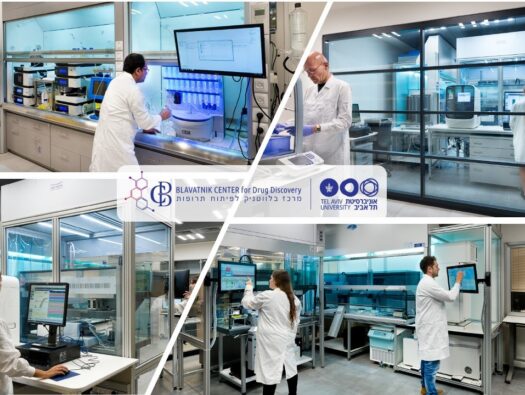
Evogene and Tel Aviv University’s Blavatnik Center for Drug Discovery have announced a strategic initiative to accelerate AI-driven small-molecule drug discovery emerging from Israel’s academic research ecosystem. Facilitated by Ramot, Tel Aviv University’s technology transfer company, the collaboration is designed to support researchers and scientific entrepreneurs working on novel disease targets. The initiative combines the Blavatnik Center for Drug Discovery’s experimental infrastructure and translational drug discovery capabilities with Evogene’s computational chemistry platform, including its ChemPass AI™ generative engine. Selected projects will receive support through an integrated design, make, test, and analyze workflow intended to help move promising biological insights toward viable drug development programs. By bringing together academic science, experimental validation, and AI-enabled molecule design, the collaboration addresses a critical gap in early-stage therapeutic innovation. The initiative reflects the Blavatnik Center’s mission to advance pioneering medical research from the laboratory toward potential patient benefit.
Aegis Ventures and Wavelet Medical Aim to Redefine the Standard of Care in Fetal Medicine
Wavelet Medical has partnered with Aegis Ventures to advance a non-invasive, AI-powered fetal brain monitoring platform that detects fetal distress in real time and helps prevent avoidable brain injury at birth. The collaboration, supported by $7 million in seed funding, aims to advance the technology from laboratory research to broader clinical testing and commercialization, with the goal of improving outcomes for both mothers and babies while reducing unnecessary interventions. It's a significant step toward a more precise and preventive standard of care in fetal medicine, with Wavelet already being tested at three clinical sites and preparing for expanded trials. Wavelet received the Blavatnik Fund for Innovation at Yale Award in 2023, an accelerator managed by Yale Ventures, which supported its early development.
Student Visa Ban Will Shut the Door on Talent
In a recent letter published by The Guardian, Professor Ngaire Woods, founding dean of the Blavatnik School of Government at the University of Oxford, warned that the UK government’s decision to halt study visas for students from Afghanistan, Cameroon, Myanmar, and Sudan risks excluding future leaders whose experience and expertise are vital to their communities and to the wider world. She argues that universities play an important role in equipping talented students to address complex public challenges and that international learning strengthens both institutions and societies. The letter highlights graduates who have gone on to contribute in fields including girls’ education, public health, and independent journalism, underscoring the broader civic value of access to higher education.
UK Visa Rules Have ‘Negative Impact’, Say Prize-Winning Scientists
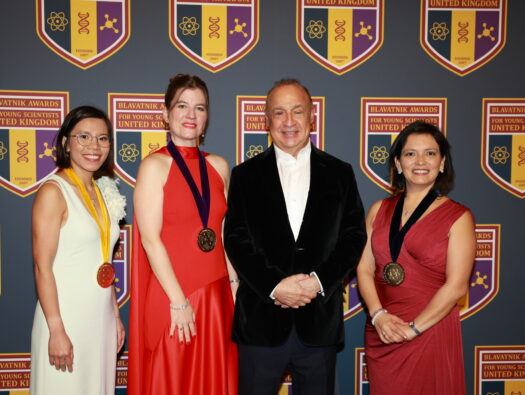
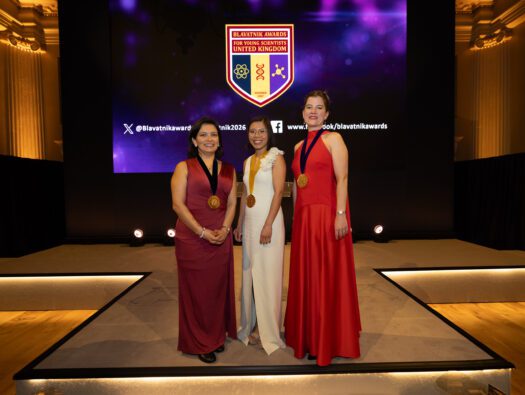
The 2026 Blavatnik Awards for Young Scientists in the UK recognize exceptional early-career researchers whose work is advancing discovery across the life sciences, chemistry, and the physical sciences and engineering. An article by Research Professional News reflects on both the significance of the Awards and the wider context in which scientific talent develops. Two of the laureates point to visa-related barriers as a continuing challenge for the UK research sector, noting the effect that cost and complexity can have on attracting and retaining outstanding international researchers. Their perspectives underscore the importance of supporting early-career scientists and fostering an environment in which excellence can flourish.
How Yale Ventures is ‘Accelerating’ Innovation
Yale News recently highlighted how Yale Ventures is helping move academic research toward real-world application, with the Blavatnik Fund for Innovation at Yale supporting faculty-led work in the life sciences as part of that broader effort. Since its founding in 2017, the Fund has supported 98 projects and awarded $24 million, helping pair promising research with the practical guidance, mentorship, and translational support needed to advance ideas beyond the lab.
‘I think I know how to fix this.’
A Harvard Medical School team led by Andrew Kruse has engineered a longer-lasting form of the hormone relaxin—an approach that could help address heart failure with preserved ejection fraction (HFpEF), a hard-to-treat condition affecting roughly 1 million people in the U.S. By converting relaxin from a two-chain to a one-chain molecule and fusing it to an antibody Fc-domain to extend its half-life, the researchers advanced a promising concept toward therapeutic use, with support from Harvard’s Office of Technology Development and the Blavatnik Biomedical Accelerator through pilot and development funding and business guidance. That early translational backing helped de-risk the science, enabling Kruse to license the technology and launch Tectonic Therapeutic, where the resulting candidate (TX45) is now in a Phase 2 clinical trial and being explored for pulmonary hypertension linked to heart failure and other serious cardiopulmonary conditions. As Kruse noted, “The Blavatnik Accelerator is really what allowed us to go from a pure research compound to something that was ultimately a clinical candidate.”
Starmer Must Use Our Scientific Stars to Drive the Economy
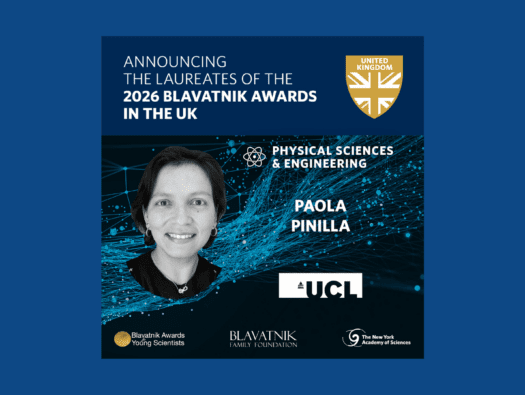
In a recent Independent commentary, Chris Blackhurst reflects on the 2026 Blavatnik Awards for Young Scientists at the Banqueting House in Whitehall, describing an evening that highlighted the UK’s strength in early-career research and its potential contribution to national renewal. The piece profiles this year’s three laureates—Maxie Roessler, Thi Hoang Duong (Kelly) Nguyen, and Paola Pinilla—recognized for advances spanning energy transfer in electrons, the biology of DNA replication and chromosome protection, and new insights into how planets begin to form. Blackhurst argues that policymakers should pay closer attention to the scientific talent already thriving in the UK, noting that past awardees have translated discoveries into patents and new ventures, and urging the government to make science and technology central to economic growth.
Colombian Astrophysicist Paola Pinilla Won an Important Award for Young Scientists
aola Pinilla of the University College London is profiled in the Columbian newspaper, El Espectador, which reports that she has been named a 2026 Blavatnik Prize UK laureate in the Physical Sciences and Engineering category. The article highlights her research on planet formation, including the identification of “pressure bumps” in protoplanetary disks—structures that support the early stages of planetary growth. Drawing on telescope observations and computer modelling, her work clarifies where planets form and how water and other essential ingredients are transported within developing planetary systems.
Learn More
Discover the cutting-edge science we fund
Providing many of the world's best researchers, scientists, and universities with support, and funding to discover breakthroughs that solve humankind's greatest challenges.
See how we support great cultural institutions around the world
The Foundation contributes to renowned institutions that showcase the breadth of arts and culture, including performance, exhibition and education.
Visit the Blavatnik Archive
The Blavatnik Archive is a nonprofit foundation dedicated to preserving and disseminating materials that contribute to the study of 20th-century Jewish and world history, with a special emphasis on World War I, World War II, and Soviet Russia.