Skip to content

innovation

Three Women Named Britain’s Brightest Young Scientists, Each Winning ‘Unrestricted’ £100,000 Blavatnik Awards Prize

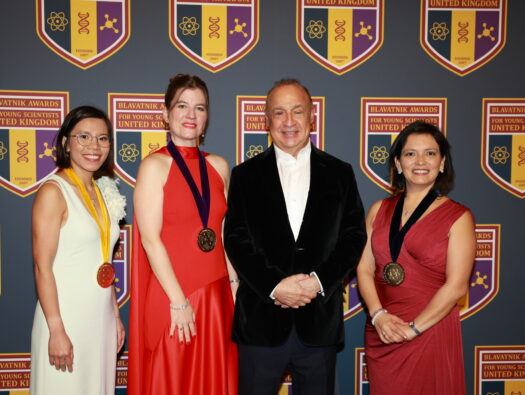
The Blavatnik Family Foundation and The New York Academy of Sciences has announced the three 2026 Laureates of the Blavatnik Awards for Young Scientists in the United Kingdom, who each receive £100,000 – the nation’s largest unrestricted prize for science. The Laureates were announced at a gala dinner and awards ceremony held at the historic Banqueting House in London. The recipients, selected from nine outstanding Finalists, are recognised for exceptional early-career achievements across the Life Sciences, Chemical Sciences, and Physical Sciences & Engineering. The remaining six Finalists are each awarded £30,000 in recognition of their exceptional scientific contributions. It is the second time in the United Kingdom that all three Laureates in the Blavatnik Awards are women scientists.

Women Sweep the Board in UK’s Biggest Science Awards

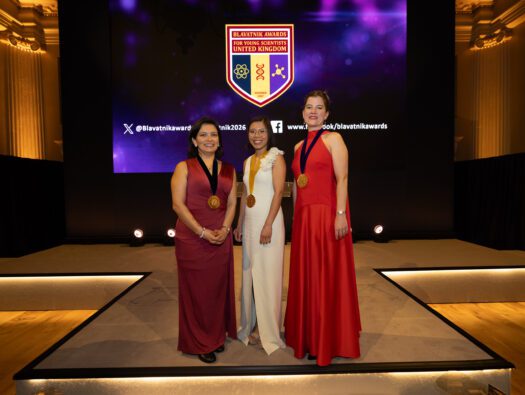
Three women have been named Britain's "brightest young scientists", each receiving £100,000 – the country's largest unrestricted prize for science. On Tuesday night, Maxie Roessler, Thi Hoang Duong (Kelly) Nguyen, and Paola Pinilla were named the laureates of the 2026 Blavatnik Awards for Young Scientists at a ceremony recognising their advances and innovations in fields including DNA replication, energy transfer in electrons, and planet formation. The awards, now in their ninth year, recognise early‑career breakthroughs with the potential to transform scientific understanding and address global challenges, and are for UK researchers aged under 42. Selected from a pool of 91 nominees across 46 institutions, the three winners were chosen for exceptional achievements in the life sciences, chemical sciences, and physical sciences and engineering. It is only the second time that all three top prizes have been awarded to women – a milestone celebrated at London’s historic Banqueting House, where the ceremony took place.

Three Women Named Britain’s Brightest Young Scientists, Each Winning ‘Unrestricted’ £100,000 Blavatnik Awards Prize

The Blavatnik Family Foundation and The New York Academy of Sciences tonight announced the three 2026 Laureates of the Blavatnik Awards for Young Scientists in the United Kingdom, who each receive £100,000 – the nation’s largest unrestricted prize for science. The Laureates were announced tonight at a gala dinner and awards ceremony held at the historic Banqueting House in London. The recipients, selected from nine outstanding Finalists, are recognised for exceptional early-career achievements across the Life Sciences, Chemical Sciences, and Physical Sciences & Engineering. The remaining six Finalists are each awarded £30,000 in recognition of their exceptional scientific contributions. It is the second time in the United Kingdom that all three Laureates in the Blavatnik Awards are women scientists.
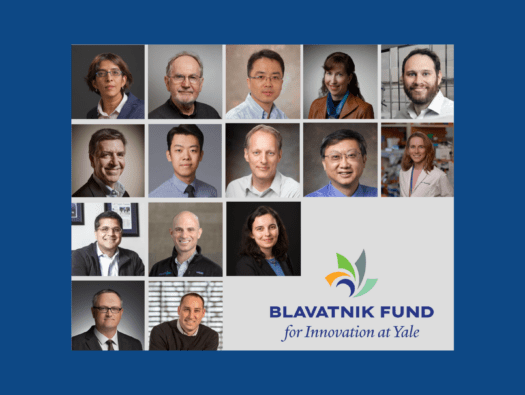
Blavatnik Fund for Innovation at Yale to Support 12 Life Sciences Projects in 2026 Spanning Oncology, Diagnostics, Neurology, Kidney and Liver Disease

The Blavatnik Fund for Innovation at Yale will support 12 faculty-led life sciences projects in 2026 that address critical challenges in oncology, neurodegeneration, diagnostics, and kidney and liver disease, advancing discoveries toward meaningful health outcomes for patients. Since 2017, the partnership between Yale and the Blavatnik Fund has supported more than 98 unique projects, spawned 46 new ventures, and enabled nine investigational new drug clearances, reflecting a sustained commitment to translating bold science into real-world solutions. Awardees in this cycle are pursuing innovations from novel therapeutics to next-generation diagnostics and platform technologies, each with the potential to reshape how disease is understood and treated. Yale’s Vice Provost for Research, Michael Crair, observed that “through the Blavatnik Fund for Innovation at Yale, we have built a robust ecosystem of entrepreneurs that helps faculty advance discoveries with real potential for societal impact.” He further emphasized that at a time when early-stage research investment is essential, the ongoing partnership with the Foundation “ensures that promising innovations do not stall in the lab” but move closer to patients.

Bangor University Researcher Announced as Finalist in Blavatnik Awards for Young Scientists

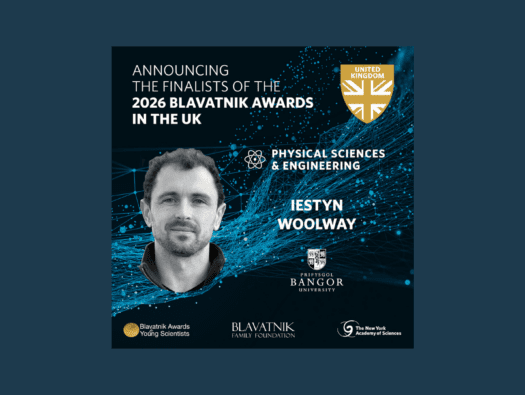
Dr Iestyn Woolway of Bangor University has been named one of nine UK finalists for the 2026 Blavatnik Awards for Young Scientists, becoming the first researcher from both Bangor University and Wales to receive this distinction. His research examines how climate change is reshaping lakes and freshwater ecosystems, advancing scientific understanding of environmental change and informing policy discussions. “I am honoured to be selected as a finalist alongside other leading researchers in the UK,” he said. The finalists will be recognised at a ceremony later this month, where the 2026 Laureates will be announced.

Pontus Skoglund Recognised as 2026 Blavatnik Finalist

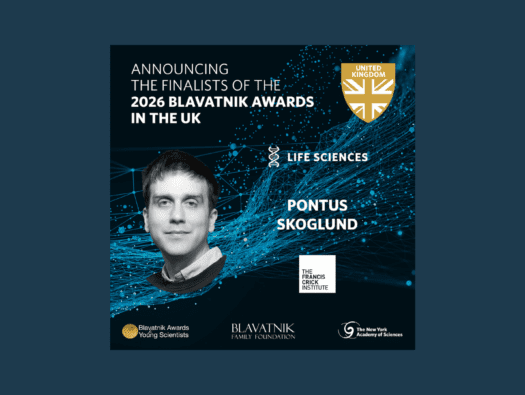
Pontus Skoglund, Senior Group Leader at the Francis Crick Institute, has been named a 2026 Blavatnik Awards for Young Scientists UK Finalist in the Life Sciences category for his pioneering work in ancient DNA and human genetic history. He established the UK’s first high-throughput ancient DNA laboratory at the Crick, significantly advancing the analysis of archaeological remains and enabling new insights into human migration and evolution. His research combines large-scale genomic data and computational approaches to reconstruct population histories and trace the co-evolution of humans and pathogens. “I am honoured to receive this recognition from the Blavatnik Family Foundation. The award reflects the collective efforts of my research group and collaborators, and it is exciting to see our work on human genetic history and disease evolution highlighted on such a significant stage,” Skoglund said. His selection as a Finalist underscores the growing impact of ancient genomics on understanding human biology, history, and disease.

Young Scientists from Across the UK Shortlisted for Largest Unrestricted Science Prize

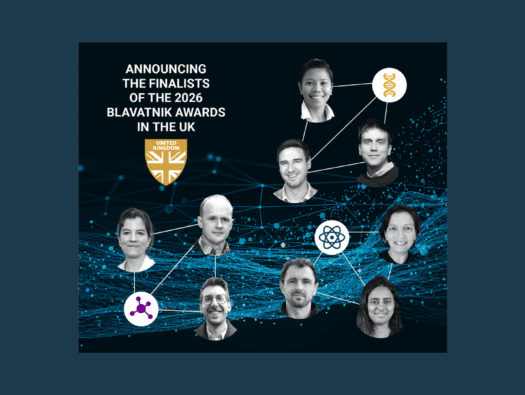
The Blavatnik Family Foundation and The New York Academy of Sciences have announced the nine Finalists for the 2026 Blavatnik Awards for Young Scientists in the United Kingdom, recognizing early-career researchers across Life Sciences, Chemical Sciences, and Physical Sciences & Engineering whose work spans areas such as genetic engineering, neurodegenerative disease mechanisms, energy processes in cells, venom toxinology, telomerase structure, ancient DNA, nanoscale materials, planet formation, and climate impacts on freshwater systems. Three Laureates, to be named at a gala in London on 24 February, will each receive an unrestricted £100,000 prize, while the six other Finalists will each be awarded £30,000 to support their research. Selected by an independent jury from 91 nominees across 46 UK institutions, the Finalists reflect both scientific excellence and the potential for broad societal impact. “The Awards were created to honor outstanding, early-career scientists, accelerate their research, and ensure that discoveries with the potential to dramatically improve society are recognized, supported, and implemented,” said Sir Leonard Blavatnik, Founder of Access Industries and Head of the Blavatnik Family Foundation. The unrestricted prizes provide flexible support that researchers can apply to advance their work without limitations. Together, this cohort highlights the depth and diversity of emerging scientific leadership in the UK.

Embodying Polymer Chemistry with a Purpose by Upcycling Plastics and Trapping PFAS

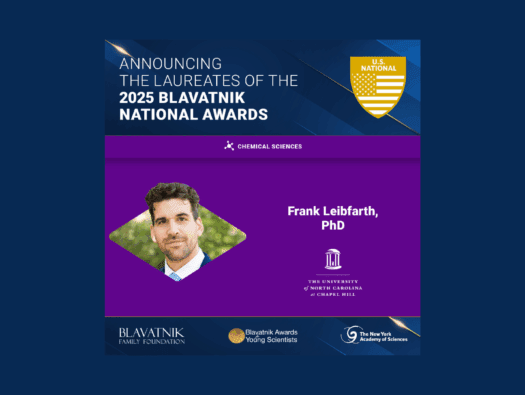
In a Chemistry World profile, Blavatnik Award–winning chemist Frank Leibfarth describes how his work in polymer chemistry is driven by purpose as much as discovery, with a focus on upcycling plastics and capturing persistent “forever chemicals” (PFAS). By redesigning how common polymers behave at the molecular level, Leibfarth aims to add value to plastic waste rather than simply recycling it into lower-grade materials. His research also explores new polymer systems that can selectively bind and remove harmful contaminants from water. Together, these efforts illustrate how thoughtful materials design can address sustainability and public-health challenges, underscoring why his work has been recognized with a Blavatnik Award for advancing chemistry that is both rigorous and socially relevant.

AI Foundation Model Aims to Make Stem Cell Therapies More Predictable

Researchers at the Blavatnik Institute at Harvard Medical School are contributing to the development of a new artificial-intelligence “foundation model” to improve the predictability and reproducibility of stem cell research, a major hurdle in regenerative medicine. By analyzing large biological datasets, the model seeks to identify the underlying rules governing cell differentiation, helping scientists anticipate outcomes and reduce reliance on trial-and-error approaches. The work has led to the formation of Cellular Intelligence, which was co-founded by researchers in the Blavatnik Institute at Harvard Medical School to translate these insights into practical tools for the field. Early work benefited from shared space and infrastructure at the Blavatnik Harvard Life Lab Longwood, illustrating how supportive translational environments can help bridge discovery science and real-world application.

Lab to Market: Where Greek Research Meets Entrepreneurship

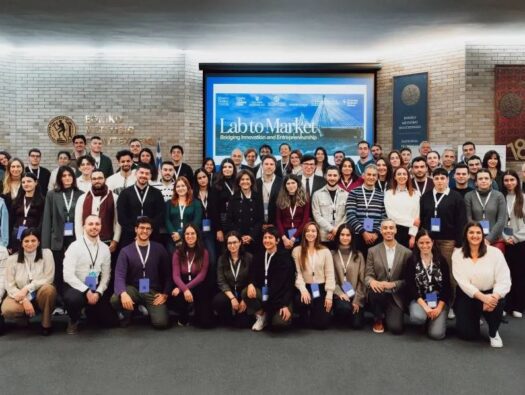
Supported by the Blavatnik Family Foundation, the Lab to Market: Bridging Innovation and Entrepreneurship program is enabling young researchers in Greece to translate scientific research into practical solutions with real-world potential. Implemented by the Columbia Global Center in Athens and overseen by Columbia University and the National Technical University of Athens, with the involvement of Columbia Business School, Endeavor Greece, and the Hellenic Institute for Advanced Studies (HIAS), the initiative brings together students and early-career researchers working on challenges ranging from microplastic exposure and medication management to earthquake resilience. Participants gain the knowledge, networks, and guidance needed to move from laboratory research to entrepreneurial application, with early projects already advancing to proof-of-concept stages.

Learn More

Discover the cutting-edge science we fund

Providing many of the world's best researchers, scientists, and universities with support, and funding to discover breakthroughs that solve humankind's greatest challenges.

See how we support great cultural institutions around the world

The Foundation contributes to renowned institutions that showcase the breadth of arts and culture, including performance, exhibition and education.

Visit the Blavatnik Archive

The Blavatnik Archive is a nonprofit foundation dedicated to preserving and disseminating materials that contribute to the study of 20th-century Jewish and world history, with a special emphasis on World War I, World War II, and Soviet Russia.

Blavatnik Family Foundation
Privacy Overview

This website uses cookies so that we can provide you with the best user experience possible. Cookie information is stored in your browser and performs functions such as recognising you when you return to our website and helping our team to understand which sections of the website you find most interesting and useful.

You can find more information by this link